When a vehicle reaches the end of its useful life in Canada, it enters a regulated recycling chain — drainage of hazardous fluids, recovery of reusable parts and high-value components, separation of steel and aluminum, and certified processing of the remaining materials. This guide explains the Canadian vehicle recycling process, the materials recovered, and the environmental regulations governing end-of-life vehicles.

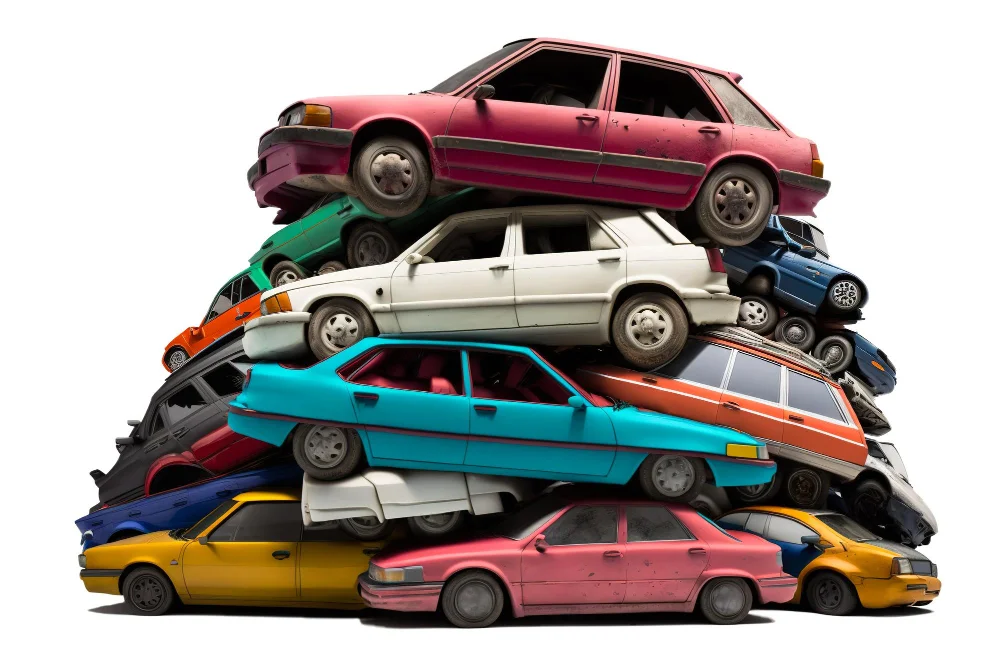
Vehicle recycling in Canada is a regulated industrial process: licensed auto recyclers receive end-of-life vehicles, drain hazardous fluids (oil, coolant, refrigerants, battery acid), remove reusable parts (engines, transmissions, alloy wheels, doors, electronics), extract catalytic converters for precious metal recovery, and process the remaining steel body through metal shredders. Approximately 75-85% of every vehicle's weight is recycled. Provincial environmental regulations govern fluid disposal and hazardous materials handling at every certified facility.
End-of-life vehicles move through five distinct stages from intake to material recovery at a certified Canadian auto recycler.
When an end-of-life vehicle arrives at a licensed Canadian auto recycler, the recycler verifies vehicle ownership documentation (provincial ownership permits — Ontario green permit, BC ICBC pink slip, equivalent provincial documents elsewhere), records the Vehicle Identification Number (VIN), and assigns the vehicle to either the parts-recovery or scrap-processing track. Vehicles with intact components route through parts recovery first; pure scrap vehicles move directly to fluid drainage.
Canadian environmental regulations require certified recyclers to drain all hazardous fluids before further processing. This includes engine oil, transmission fluid, coolant, brake fluid, power steering fluid, gasoline, and air conditioning refrigerants (ozone-depleting substances under federal regulations). The lead-acid battery is removed for separate recycling. Fluids are stored in approved containment and disposed of through licensed waste management facilities per provincial environmental regulations.
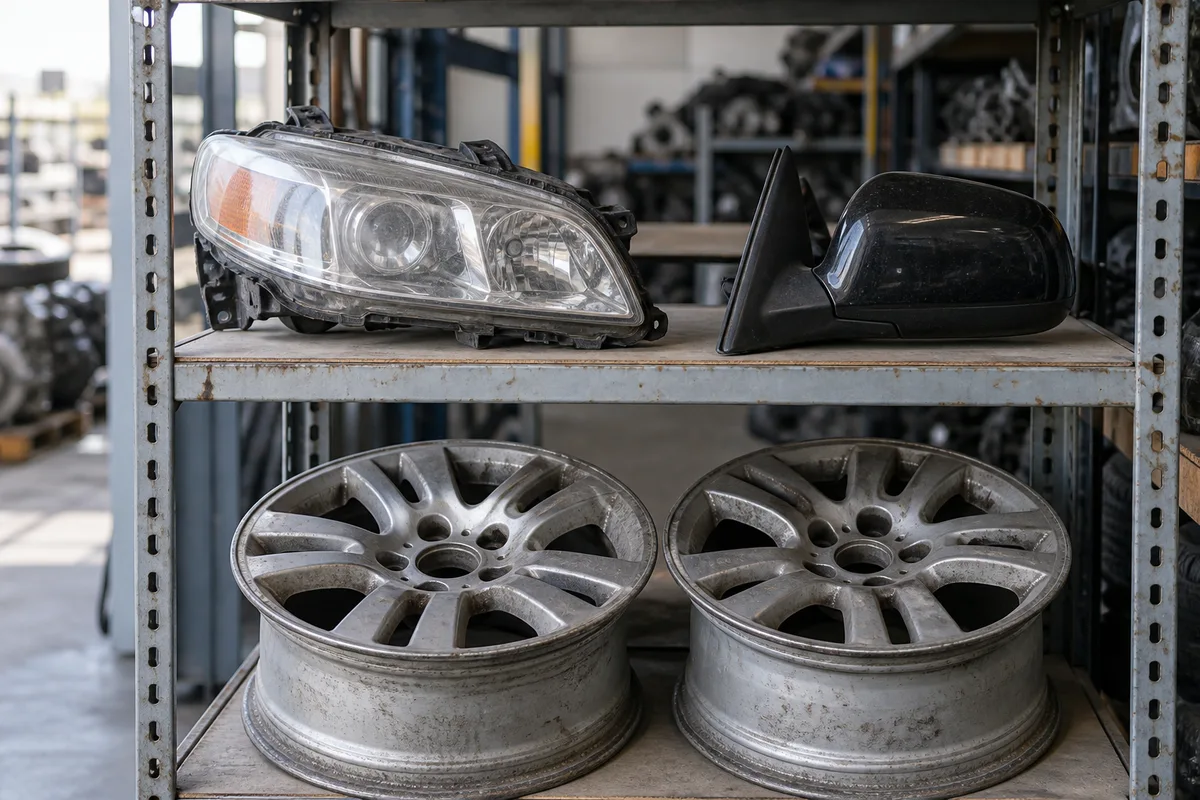
Recyclers inventory and recover parts with resale market demand: complete engines, transmissions, alternators, starters, intact doors, body panels in good condition, alloy wheels, infotainment electronics, headlights and taillights, mirrors, and seats. Typical individual part recovery values: engines $200-$500, transmissions $150-$400, doors $50-$200, alloy wheels $25-$75 each. Recovered parts enter the auto-parts secondary market through licensed parts dealers.
The catalytic converter is removed and processed separately. Catalytic converters contain platinum, palladium, and rhodium — precious metals that by weight can exceed gold. Per-vehicle catalytic converter value ranges from $100-$500 depending on vehicle type, engine size, and converter generation. Certified processors refine the metals back into the manufacturing supply chain.
The remaining vehicle body — primarily steel with aluminum components — enters a metal shredder. The shredder breaks the vehicle into fragments; separators (magnetic for steel, eddy current for aluminum) sort the fragments by metal type. Canadian steel scrap trades at $0.08-$0.12 per pound; aluminum at $0.70-$0.90 per pound. Recovered steel and aluminum re-enter manufacturing as feedstock for new products.
A typical end-of-life vehicle yields recovered materials across seven categories.
| Material | Approximate Share | Recovery Process | End Use |
|---|---|---|---|
| Steel | 60-70% of vehicle weight | Magnetic separation after shredding | New steel products (construction, automotive sheet, manufacturing) |
| Aluminum | 5-10% of vehicle weight | Eddy-current separation after shredding | Aluminum products (cans, sheet, transportation, building materials) |
| Reusable parts (engines, transmissions, electronics, panels) | 10-15% of vehicle weight | Manual removal before shredding | Auto-parts secondary market |
| Catalytic converter (platinum, palladium, rhodium) | <0.5% of vehicle weight, >5% of recovery value | Removed separately; refined through certified processors | Precious metals back into manufacturing supply chain |
| Plastics and rubber | 8-12% of vehicle weight | Limited recovery; some routed to industrial recycling | Variable — partial recycling, partial landfill |
| Glass | 2-4% of vehicle weight | Limited recovery in standard recycling streams | Variable |
| Hazardous fluids and battery | <1% of vehicle weight | Drained and removed before processing | Licensed hazardous-waste disposal; battery recycling |
Overall, approximately 75-85% of an end-of-life vehicle's weight is recovered through the Canadian recycling process, making vehicles one of the most-recycled consumer products by weight. Steel recovery is the highest-volume stream; catalytic converter precious metals are the highest-value-per-pound stream.
Recovery profiles vary by vehicle type. Older vehicles are mechanically simpler to dismantle and tend to yield higher recoverable parts value if components remain intact. Newer vehicles (post-2010) carry more aluminum, electronics, and integrated plastics that require additional separation. Hybrid and electric vehicles add a further layer: lithium-ion batteries and high-voltage systems must be isolated and processed separately through specialist battery recyclers.
Not every material recycles efficiently — some plastics, insulation, adhesives, and contaminated components still require regulated disposal, which is why recovery rates stop short of 100%.
Vehicle recycling in Canada operates under multiple regulatory frameworks. Federal regulations cover ozone-depleting substances (air conditioning refrigerants under the Ozone-depleting Substances and Halocarbon Alternatives Regulations), interprovincial movement of hazardous waste, and Canadian Environmental Protection Act (CEPA) requirements applicable to end-of-life vehicle processing.
Provincial regulations govern day-to-day recycler operations: licensing requirements (administered by Ontario's Ministry of the Environment, Conservation and Parks; BC's Ministry of Environment and Climate Change Strategy; Alberta Environment and Protected Areas; equivalent provincial regulators elsewhere), waste storage and disposal standards, fluid containment requirements, and reporting obligations. Most provinces require auto recyclers to hold a current operating licence.
Some provinces operate specific end-of-life vehicle programs that incentivize older-vehicle retirement and certified recycling. British Columbia's BC Scrap-It Program, for example, offers incentives for retiring older high-emission vehicles for certified scrap or replacement with lower-emission transportation. Other provincial and municipal programs exist on similar bases. These programs operate alongside the standard recycling regulatory framework, not in place of it — vehicles retired through a Scrap-It-type program still pass through the recycling chain described above.
The Canadian recycler landscape. Canada has hundreds of licensed auto recyclers operating across the country, from independent single-facility operators to large multi-location enterprises. Industry associations include the Automotive Recyclers of Canada (ARC) and the Ontario Automotive Recyclers Association (OARA). Major recycler clusters concentrate around the Greater Toronto Area, BC's Lower Mainland, and the Calgary-Edmonton corridor.
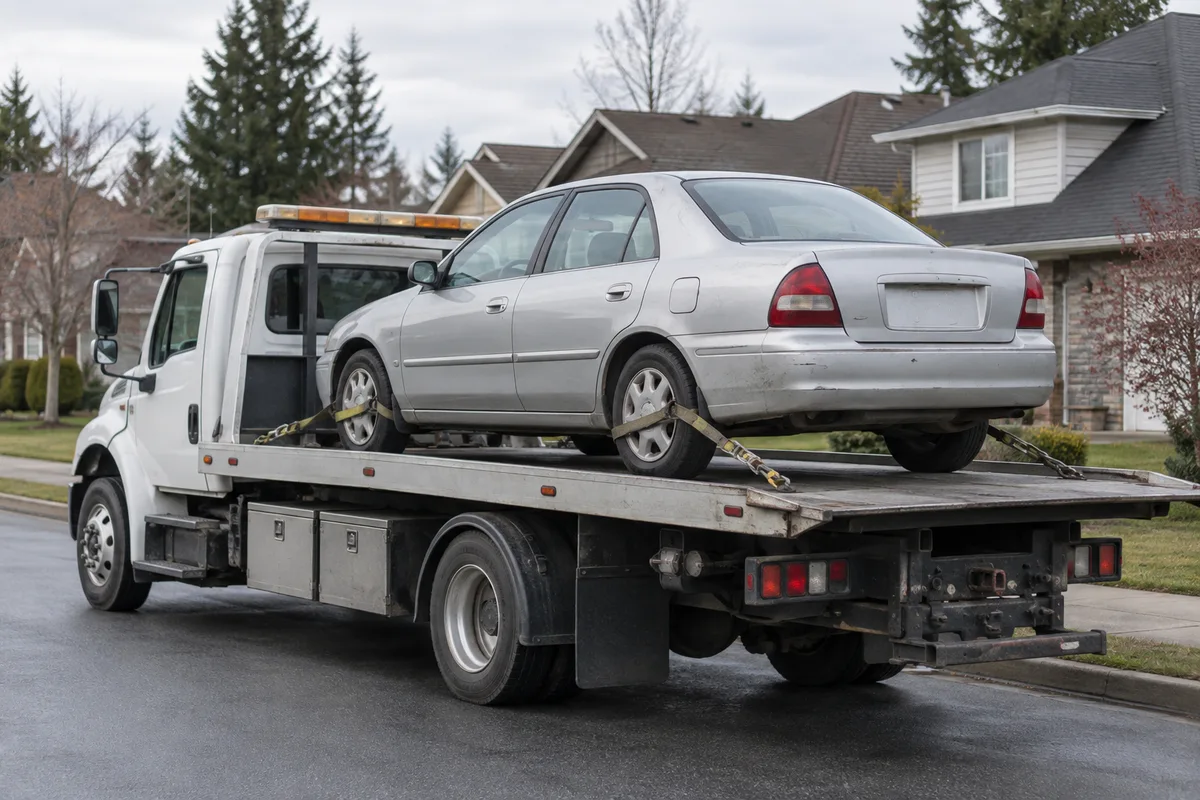
How vehicles reach the recycling chain. When a vehicle reaches end-of-life, it typically enters the recycling supply chain through one of three routes: (1) direct sale by the owner to an auto recycler or junk yard, (2) sale to a scrap car removal service that arranges pickup and routes the vehicle to a licensed recycler, or (3) insurance disposition after a total-loss claim, where the insurer's salvage process places the vehicle with an auction or recycler.
Cash For Cars in the supply chain. Cash For Cars operates as a service intermediary in this chain, picking up end-of-life vehicles from owners across Canada and delivering them to a partner network of licensed auto recyclers. The recyclers then handle the technical recycling steps described in the earlier sections. See scrap car removal for the service-side process.
The practical route for most owners. For most Canadian vehicle owners, the simplest path into the recycling supply chain is selling to a scrap or junk car removal service that arranges pickup and routes the vehicle to a licensed recycler. Cash For Cars provides this service across Canada — free pickup, cash on collection, and partner-network coverage across the Lower Mainland (BC), the Greater Toronto Area (Ontario), and beyond.
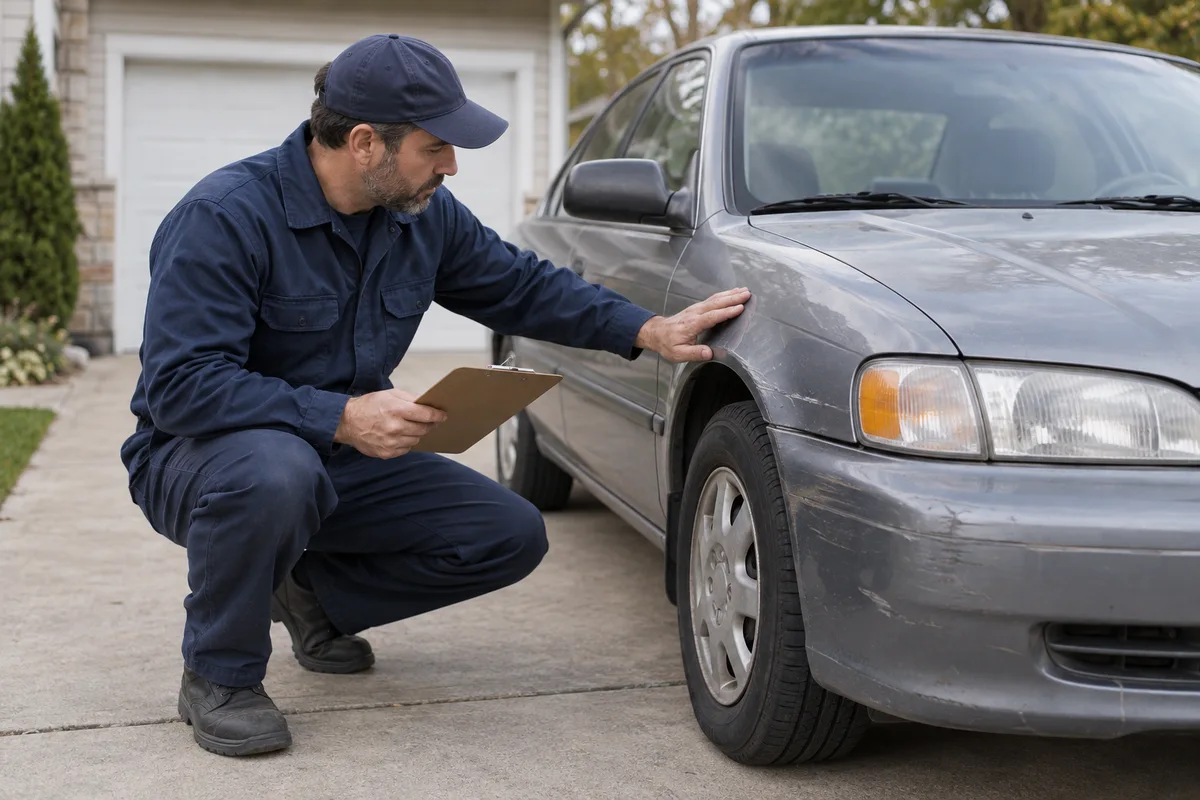
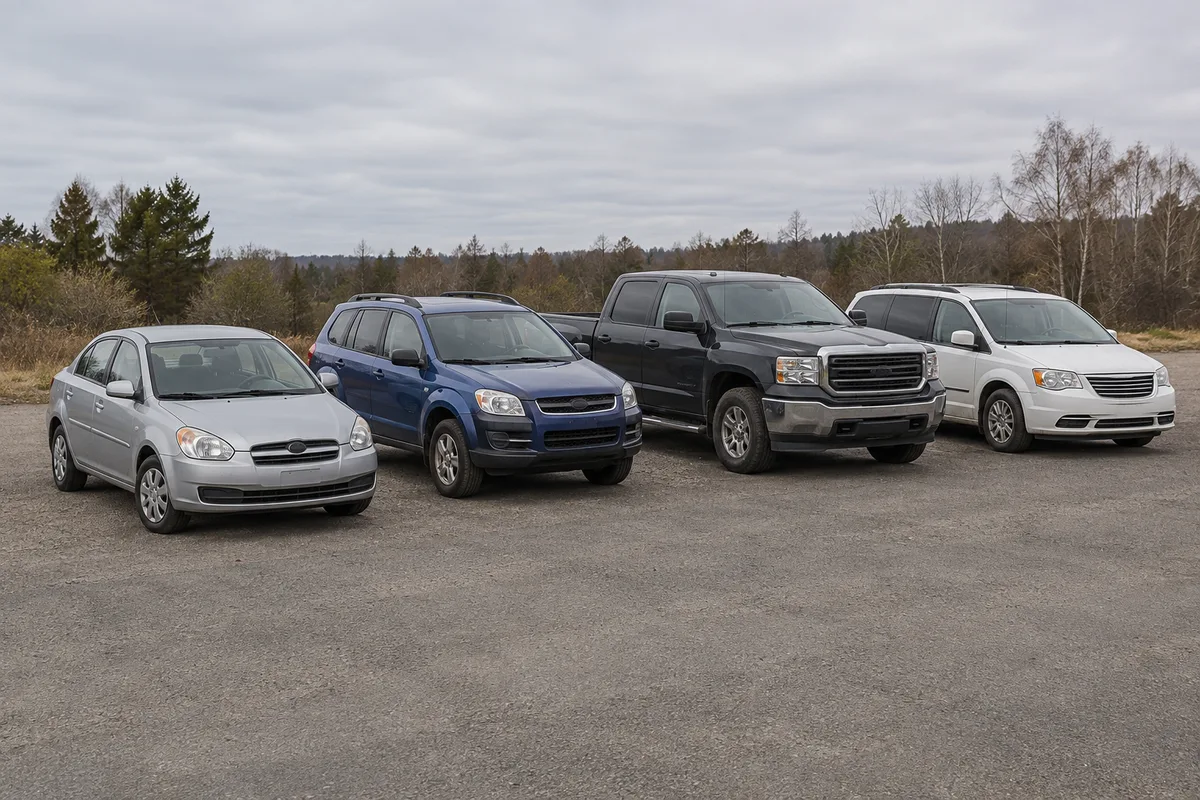
What the process looks like. Get a free estimate using the scrap and junk car value calculator — typical Canadian scrap car values range from $150-$800 for sedans, $300-$1,500 for SUVs, and $500-$2,500 for trucks. Confirm pickup with your local partner. Prepare your provincial vehicle ownership documentation. Receive cash on collection. The vehicle enters the partner network's licensed recycler chain immediately after pickup.
Where to go next. For the full service-side walkthrough, see scrap car removal. For the calculator, use the link above. For city-specific pickup logistics, see Cash for cars in Surrey, BC or Cash for cars in Toronto, ON.
If your vehicle has reached the end of its useful life, the scrap car removal service routes it into Canada's certified recycling chain — free pickup, cash on collection, and partner-network coverage across the country. Use the calculator below for a free estimate, see scrap car removal for service details, or contact the team to discuss your specific vehicle.