Most vehicles in Canada qualify for cash for cars — regardless of condition. The basic qualification rule: if you can document ownership, the vehicle qualifies for an offer. Condition affects the dollar amount, not eligibility.
Selling your vehicle for cash through Cash For Cars takes four steps — a free online estimate, pickup scheduling, vehicle inspection at collection, and cash payment when the vehicle is taken. Here’s how the process works and what vehicles qualify.

Cash For Cars buys scrap, junk, and unwanted vehicles across Canada with a four-step process: free online estimate, scheduled pickup, vehicle collection, and cash payment on the spot. This process serves vehicle owners who want a no-hassle cash sale without the complications of private resale or trade-in negotiation. The page below covers what makes a vehicle qualify, what determines the offer, what to expect at each step, and how cash for cars compares to other ways of selling an unwanted car.
Enter your vehicle details into the scrap and junk car value calculator — year, make, model, condition, province, and city. The estimate uses current Canadian scrap metal prices, vehicle weight, parts demand, and provincial market conditions to return a value range before you commit to anything. No signup, no obligation. The range is what your vehicle is reasonably worth based on what was described.
A local partner contacts you to confirm pickup details: location access, timing, and what documents to have ready. Same-day pickup is common in metropolitan areas; pickup usually takes 1–3 business days in less-dense regions. Pickup availability and exact timing are confirmed at this stage, including any province-specific transfer paperwork. For the full step-by-step walkthrough, see the cash for cars process.
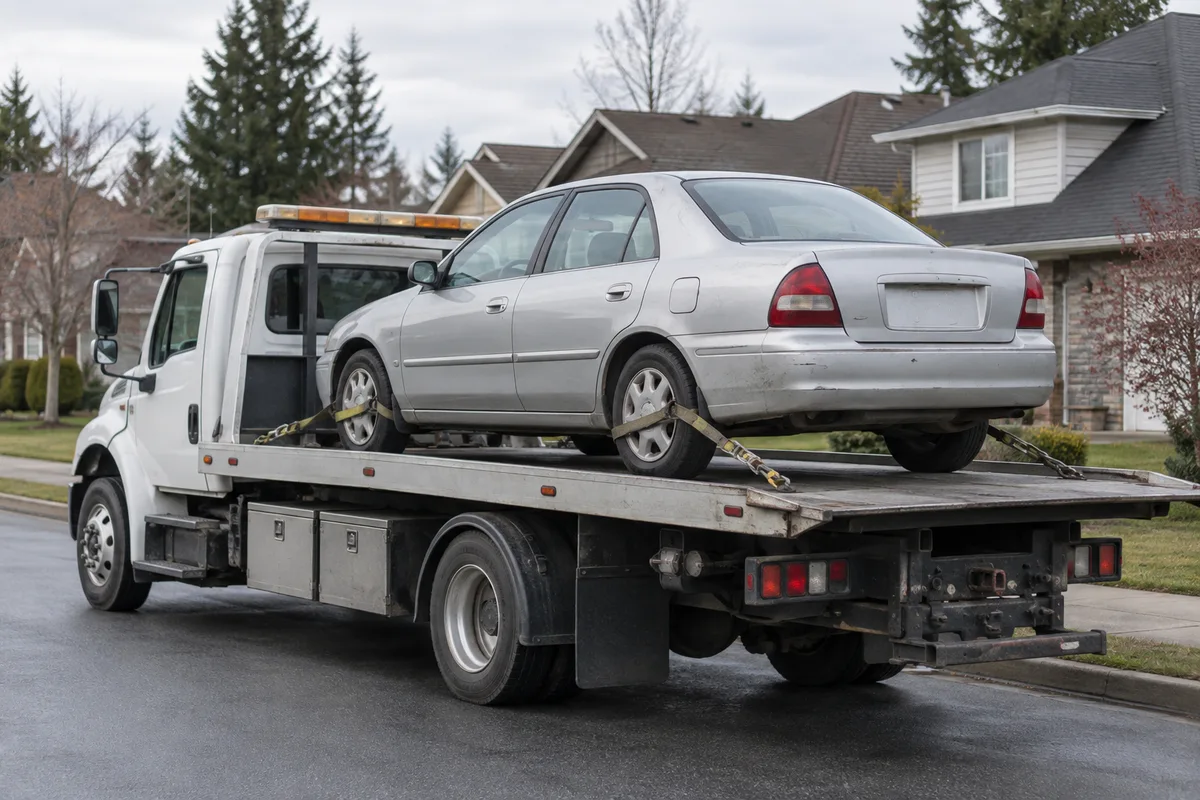
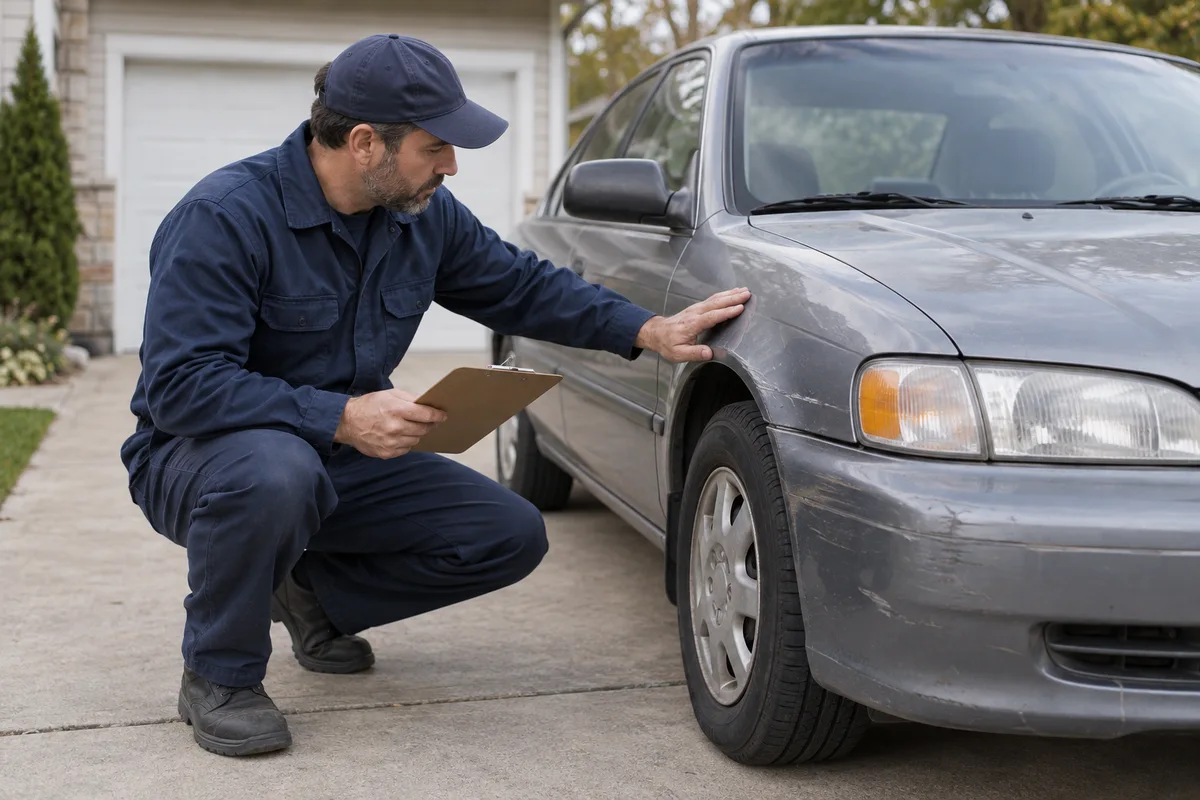
The partner arrives with a tow truck. A brief on-site inspection confirms the vehicle matches what was described in the estimate. If condition matches, the offer is finalized. If the vehicle has more value than the original estimate or less value because of missing parts or additional damage, the offer is adjusted on the spot with an explanation. BC vehicle owners with eligible older vehicles may also qualify for the BC Scrap-It Program incentive in addition to the cash offer.
Payment is handed over — or sent by e-transfer — before the vehicle leaves your property. You sign the transfer documents, the vehicle is loaded, and you keep your plates in provinces where plates stay with the owner, including BC, Alberta, Saskatchewan, and Manitoba. There is no waiting for cheques to clear and no processing delay at a yard before payment lands.
Most vehicles in Canada qualify for cash for cars — regardless of condition. The basic qualification rule: if you can document ownership, the vehicle qualifies for an offer. Condition affects the dollar amount, not eligibility.
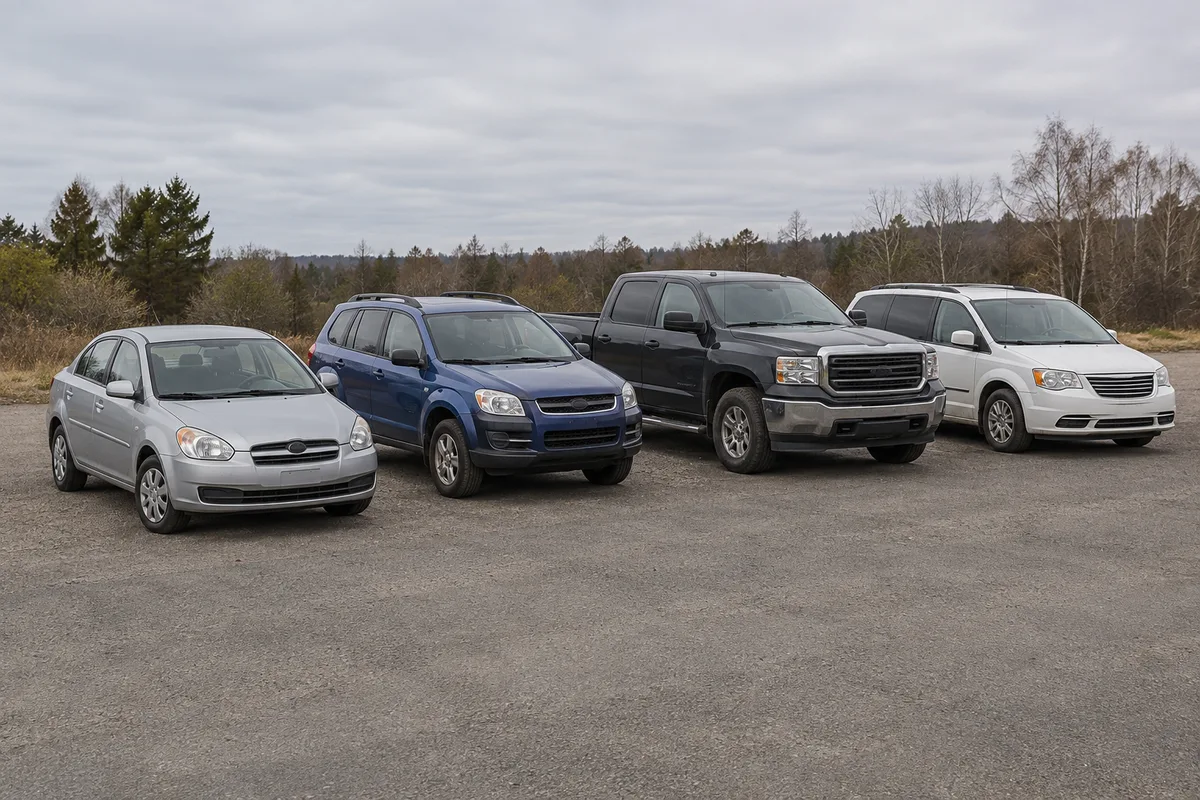
Cash For Cars accepts cars, SUVs, crossovers, pickup trucks, minivans, full-size vans, commercial vans, and light commercial vehicles. Specialty vehicles, including motorcycles and trailers, are partner-dependent and confirmed when you submit the calculator.
For category-specific detail on each vehicle type and notes on rare exclusions, see what vehicles we buy.
Non-running, damaged, high-mileage, end-of-life, abandoned, and estate vehicles can qualify when ownership can be documented. Condition changes the offer amount because engines, transmissions, catalytic converters, electronics, and body panels can add or reduce value.
Vehicles without ownership documentation cannot be processed through the standard cash-for-cars route. Vehicles with active liens can usually still be sold, but the lien typically needs to be cleared before — or settled out of — the cash payment, depending on the lienholder. Commercial fleet vehicles often require fleet-specific arrangements rather than the standard process.
A cash offer reflects four factors: vehicle weight and class, vehicle condition and parts, province and local market, and current scrap metal prices. The first two are about your specific vehicle; the second two are about the market your vehicle is being sold into.
Heavier vehicles yield more base metal value than lighter ones. National ranges: sedans $150–$800, SUVs $300–$1,500, and trucks $500–$2,500. A standard 1.5-ton sedan contributes meaningfully less metal weight than a 2.5-ton pickup, and the offer reflects that difference before any parts value is added.
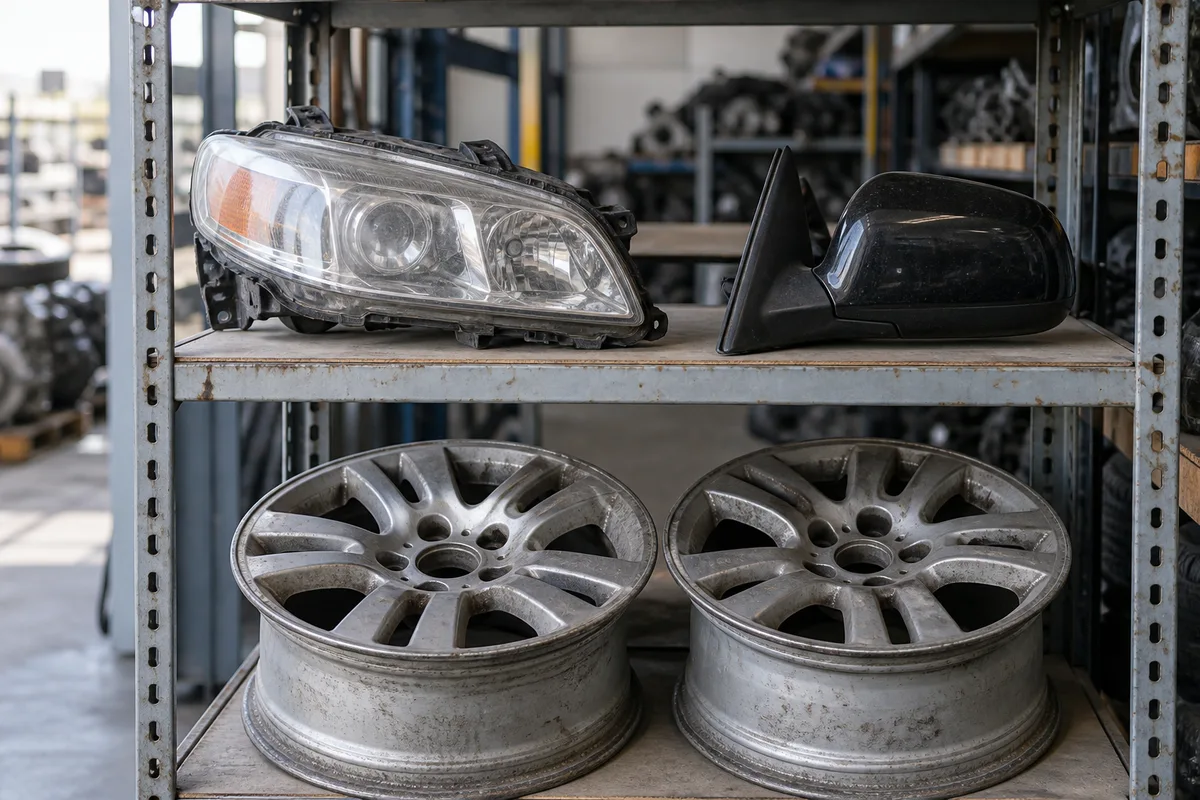
Running engines, intact catalytic converters, undamaged transmissions, alloy wheels, and high-demand electronics add value beyond raw metal weight. A running junk car with intact high-value components can reach $5,000 depending on make and model demand, well above what the same vehicle would be worth as pure scrap.
Pricing varies by province because steel rates, recycler density, and demand patterns differ. Ontario tends to deliver the highest scrap car offers nationally; British Columbia, Alberta, and Manitoba follow. Local urban density also matters — metropolitan areas with multiple recyclers competing typically pay more than remote regions.
Steel, aluminum, and catalytic converter precious metal prices fluctuate month to month. Offers reflect the rates at the time of pickup, not the time of estimate — which is why the on-site inspection finalizes the number. For a more detailed breakdown of how these inputs interact, see factors that affect scrap car value.
To check what these factors translate to for your specific vehicle, get an estimated value using the calculator.
Cash for cars is not always the right choice. For a running vehicle with resale demand, a private sale often pays more. For a drivable vehicle being replaced at a dealership, a trade-in is sometimes simpler. The table below covers the realistic trade-offs so you can match the right option to your situation.
| Option | Best for | Timeframe | Effort | Typical value |
|---|---|---|---|---|
| Cash for cars | End-of-life, non-running, damaged, or low-value vehicles | Estimate same day; pickup 1–3 business days | Minimal — calculator, scheduling, and paperwork at pickup | Scrap-to-junk range: $150–$5,000 depending on condition |
| Private sale | Running vehicles with resale demand | Weeks to months | High — listing, inquiries, test drives, negotiation, transfer | Highest possible price, but requires a running vehicle and time |
| Trade-in at dealership | Running vehicles when buying another vehicle from the same dealer | Same day at dealer visit | Low | Typically 10–30% below private sale; non-running vehicles often refused |
| Donation | Drivable vehicles when a tax receipt and cause alignment matter more than cash | Variable | Low | Tax receipt, not cash |
| Selling parts privately | Vehicles with specific high-demand parts | Weeks to months | Very high — requires mechanical knowledge and access to part buyers | Can exceed whole-vehicle cash offers by 30–50%, but requires significant time and skill |
If your vehicle is end-of-life, non-running, or you want a cash sale completed in days rather than weeks, cash for cars is typically the simplest match for the situation. If your vehicle is running and has resale demand, private sale is worth considering first.
The three reasons owners typically pick the cash-for-cars route over the alternatives:
The calculator returns a value range before any phone call or pickup commitment is required. You see what is possible before scheduling anything.
Payment is handed over or e-transferred when the vehicle is taken from your property — not days later, after the vehicle has been weighed and processed at a facility.
Cash For Cars operates from a verified Surrey, BC home base and works with vetted regional partners across the country. Local pickup is fulfilled by a partner familiar with the regional market, not a national fleet routed in.
Seven common questions, answered directly — covering the process, eligibility, timing, documents, liens, estimates, and Canada-wide coverage.
The fastest way to see what your vehicle is worth is the free online calculator. Enter your vehicle details and you’ll have a range in seconds.